





Remarks by Director Michael Kratsios at the India AI Impact Summit
Director Michael Kratsios
The White House Office of Science and Technology Policy
Remarks at the India AI Impact Summit 2026
Good morning, everyone. Thank you to the distinguished heads of state, public servants, and business leaders participating in India’s AI Impact Summit 2026 here in New Delhi. It is a great honor to speak to you as head of delegation, representing the United States of America.
***
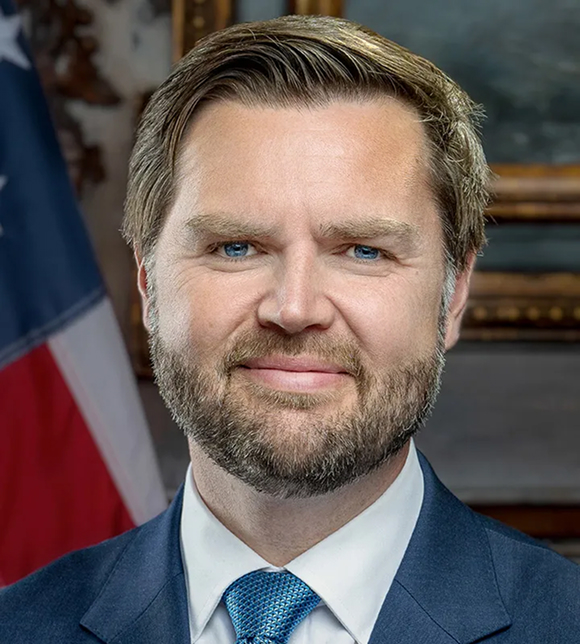
At this summit last year in Paris, Vice President J.D. Vance sought to refocus the AI conversation in his remarks, from safety to opportunity.
The future is something to be built, not awaited. And both the problems and solutions that AI presents are opportunities to make bold choices to better the lives of the people we represent.
So today, I want to call on each of you to join us as partners in the effort to build the AI future, on behalf of your own nation and your own people.
***
America is the birthplace of AI and the home of the frontier companies and hyperscalers that have ushered in this critical moment. That is no accident.
Within days of returning to the White House last year, President Trump recommitted America to AI leadership. He repealed the last administration’s so-called diffusion framework, which prevented AI exports and placed partner countries, like India, in a supposed second tier. And last summer, the Trump Administration released America’s AI Action Plan, a strategy for winning the AI race based on three pillars: Innovation, Infrastructure, and International Partnerships.
Today, America’s leading position is clearly visible in a booming U.S. AI industry. Our biggest AI and chip companies have individual market caps that exceed that of the entire FTSE 100. Our four largest AI companies plan to spend nearly $700 billion on AI infrastructure this year, three times more than it cost to put American footsteps on the surface of the Moon. And of the billion people using America’s leading AI platforms, more than three quarters log on from your countries, outside the U.S.
Industry benchmarks show that American AI services are more capable and cost-effective than competitors for nearly every application, and offer greater robustness and security. American chips are many times more advanced and reliable than alternatives—sought by nations spanning the globe, both west and east. And when competitor nations claim to have made breakthroughs in frontier models, U.S. companies recognize the tell-tale signs of American innovation.
The gold standard in AI is made in America.
***
International discussion of AI has evolved, as this summit itself attests. We have moved from gathering to talk about AI safety to calling for AI action, and now we are here to consider AI impact.
I think this is clearly a positive development. But it is not clear to me that these forward-thinking changes in how we describe these gatherings are much more than cosmetic. Too many international forums, such as the U.N.’s Global Dialogue on AI Governance, maintain a general atmosphere of fear.
We must replace that fear with hope. We cannot allow AI to become, as nuclear power was for many decades, a foundation for a future of abundance, abandoned and left unrealized.
Ideological, risk-focused obsessions, such as climate or equity, become excuses for bureaucratic management and centralization. In the name of safety, they increase the danger that these tools will be used for tyrannical control.
I believe that if we embrace AI and exercise its power well, it will advance human flourishing and drive unprecedented prosperity.
Focusing AI policy on safety and speculative risks, however, rather than concrete opportunities, inhibits a competitive ecosystem, entrenches incumbents, and isolates developing countries from full participation in the AI economy.
***
Adoption remains the critical bottleneck in realizing AI’s potential to transform industries and unleash new productivity. I will address international AI adoption trends shortly, but, in the American context, I see two main limiting factors.
One is trust. Regulatory and non-regulatory policy frameworks that safeguard the public interest are necessary to earn the public’s trust in AI. To give the American people confidence in these tools, the Trump Administration seeks to support legislators as they construct a national policy framework that protects children, prevents censorship, respects intellectual property, and safeguards our workers, families, and communities.
The other primary limiting factor to U.S. AI adoption is regulatory certainty and clarity. It is our position that, with smart updates to existing frameworks to reflect new technological realities, use-case and sector-specific regulation best allows adoption. This gives industry confidence that tomorrow’s rules will be common-sense developments of today’s, allowing them to focus on creative deployment.
***
AI governance must focus on the particular needs and interests of particular people, and so it must be local.
As the Trump Administration has now said many times: We totally reject global governance of AI. We believe AI adoption cannot lead to a brighter future if it is subject to bureaucracies and centralized control.
Prioritizing AI for your people does not mean joining international efforts that are either purely symbolic or a sacrifice of national self-determination.
It does not mean constructing a regulatory regime that exchanges your countries’ capacity to build and innovate for the self-satisfaction of technocrats.
It does not mean isolating yourself, hoping to reconstruct the whole AI stack from scratch even as you are left behind.
Prioritizing AI for your people means pursuing a sovereign AI capability for your country now. This begins with the rapid adoption of the best components of the technology stack available, while your national champions work to develop their own.
***
Real AI sovereignty means owning and using best-in-class technology for the benefit of your people, and charting your national destiny in the midst of global transformations. It does not mean waiting to participate in an AI-enabled global market until you have tried and failed to build full self-sufficiency.
Complete technological self-containment is unrealistic for any country, because the AI stack is incredibly complex. But strategic autonomy alongside rapid AI adoption is achievable, and it is a necessity for independent nations. America wants to help.
We believe that independent partners are critical to unlocking the prosperity AI adoption can open to all of us. That is why the president launched the American AI Export Program. That is why I am here with you today.
The U.S. setting the gold standard for AI means winning on the merits. We believe American companies and technology succeeds in open competition, and we want to lead an AI ecosystem that works with your local technologies, local datasets, and local languages, rather than imposing global standards or pursuing vendor-lock-in.
America is the only AI superpower willing and able to truly empower partner nations in your pursuit of meaningful AI sovereignty. American companies can build large, independent AI infrastructure, with secure and robust supply chains that minimize backdoor risk. They build it; it’s yours.
American AI companies and open-source models can enable local training and fine-tuning with linguistic and cultural adaptation, without embedded political orthodoxies. And cryptographically protected confidentiality, and world-leading American security, can help you keep your sensitive data within your borders and within your control.
***
The Trump Administration is passionate about sharing the benefits of American AI, and we have thought long and hard about how we can help make the AI future one of prosperous collaboration and peaceful competition, together.
The United States and the rest of the world can only fully realize the amazing potential of this technology when we share an open, cooperative AI ecosystem built on top of localized, sovereign infrastructure. But as you know, while use of AI tools continues to grow worldwide, the pace of adoption and sophistication of deployment continues to stratify. Developing countries are falling behind developed economies at a fundamental inflection point.
Developed countries face adoption problems similar to America’s, and are primarily concerned about how their native technology companies will fit into a competitive global AI ecosystem. But developing countries face two additional barriers to AI adoption.
One is financing. The AI stack is expensive. Through the enormous energy and material demands of its infrastructure, it brings the digital transformation of our world back into physical reality. Data centers, semiconductors, power production, all of these elements require physical labor and resources. The other barrier is a deficit in the technical sophistication needed to deploy AI tools as effectively as possible.
To help facilitate worldwide adoption of trusted AI systems; the creation of a competitive, open, and interoperable AI ecosystem; and to further the efforts of the American AI Exports Program in both developed and developing partner nations, today I am pleased to announce a U.S. government-wide suite of support initiatives.
To integrate partner nation companies with the American AI stack, ensuring that no country has to choose between completing the stack and developing domestic AI, we have established a National Champions Initiative. We recognize that partners need the chance to build their native technology industries, and believe facilitating this will be a critical part of the exports program.
To facilitate the development of industry-led, open, and secure AI agent standards, and to give the public confidence in this next-generation technology, we are creating an AI Agent Standards Initiative.
To empower developing partner countries to overcome financing obstacles as they import the American AI stack, the U.S. International Development Finance Corporation, the Export-Import Bank of the United States, the U.S. Trade and Development Agency, the Millennium Challenge Corporation, and a new World Bank Fund have all initiated new AI-focused programs.
And to further enable AI adoption in the developing world, the Trump Administration is bringing America’s historic Peace Corps into the 21st Century with the launch of the Tech Corps. This new initiative will embed volunteer technical talent with import partners to provide last-mile support in deploying powerful AI applications for enhanced public services. In everything from energy and education, to manufacturing and medicine, to transportation and agriculture, I am confident that the American AI stack can be key to unlocking new economic and social benefits for your people.
***
The hope of the United States is that the pursuit of real AI sovereignty—the adoption and deployment of sovereign infrastructure, sovereign data, sovereign models, and sovereign policies within your borders, under your control—will become an occasion for bilateral diplomacy, international development, and global economic dynamism.
The American AI Exports Program exists to make that happen.
The U.S. wants to share the American AI stack, because this technology presents the opportunity to lead—as our nation’s Founders did 250 years ago—a revolution in human history, to the benefit of all mankind. These tools, used well, will unlock new knowledge of our world and new sources of prosperity, and challenge us to grow the strength of our humanity to match our growing capabilities.
American AI is settling a new frontier, but America does not seek to build this new future alone. So, I ask you to join us.
Thank you.