










President Trump Visits Alaska: Delivering Results for the Last Frontier
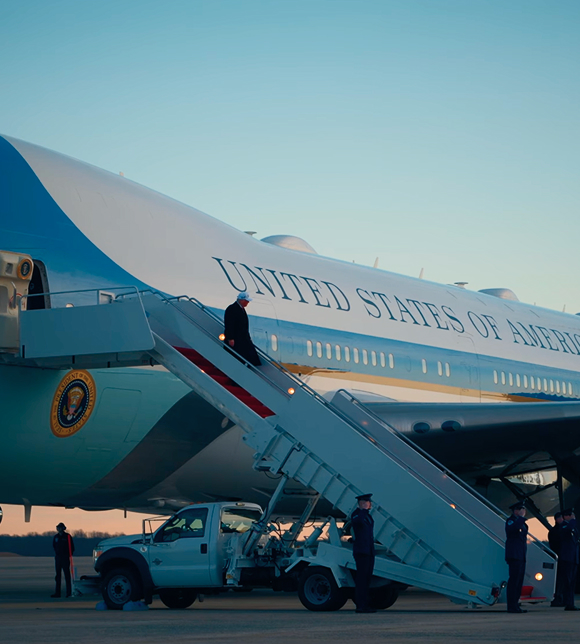
Today, President Donald J. Trump travels to Alaska. He returns to the Last Frontier with a proven record of results that put Alaskans first: lower taxes, responsible development of the state’s vast energy and mineral resources, safer communities, strong support for fisheries, and major investments that create jobs and reinforce America’s Arctic security.
Tax Relief That Puts Money Back in Alaskans’ Pockets
President Trump’s Working Families Tax Cuts are delivering direct relief to Alaska workers, families, and seniors.
- No Tax on Tips: Approximately 14,000 Alaska workers no longer pay federal income taxes on tips.
- No Tax on Social Security: About 100,000 Alaska seniors benefit from the new senior deduction.
- Bigger Refunds: Alaska taxpayers saw average refunds of $3,690 in 2026.
- Rural Health Investments: Alaska secured about $272 million in first-year Rural Health Transformation Program funding.
- Protecting Jobs and Wages: The Working Families Tax Cuts safeguarded 11,000 Alaska jobs, $2 billion in state GDP, and $1 billion in workers’ wages.
Unleashing Alaska’s Energy, Minerals, and Economic Potential
President Trump is reversing years of restrictions, unlocking responsible development of Alaska’s oil, gas, and critical minerals.
- In October 2026, the Trump Administration secured $150 million in Defense Production Act funding for a major new power line that will lower energy costs for 75% of Alaskans.
- In September 2026, President Trump unveiled a $200 billion South Korean investment in U.S. energy that includes $54 billion to construct a new natural gas pipeline in Alaska.
- In December 2025, the Trump Administration reopened nearly 82% of the National Petroleum Reserve-Alaska to oil and gas leasing.
- In October 2025, the Trump Administration opened 1.56 million acres of the Coastal Plain to oil and gas leasing, reversing Biden-era restrictions.
- In October 2025, President Trump approved the Ambler Road Project, providing essential access to the Ambler Mining District’s large deposits of copper, cobalt, gallium, germanium, and other critical minerals.
- In June 2025, the Trump Administration advanced plans to open an additional seven million federally managed acres on the North Slope to new oil development.
- In January 2025, President Trump signed an Executive Order directing federal agencies to prioritize development of Alaska’s oil, gas, minerals, and other natural resources.
Protecting Alaska’s Communities, Fisheries, and Veterans
President Trump has moved quickly to restore historic names, support Alaska’s vital fishing industry, and expand care for the state’s veterans.
- On his first day in office, President Trump restored the name Mount McKinley, reversing the Obama Administration’s 2015 change and returning the designation that stood from 1917.
- The Trump Administration ensured Alaska groundfish fisheries opened on time, protecting a total value of $301.1 million for Gulf of Alaska fisheries and $2.64 billion for Bering Sea and Aleutian Islands fisheries.
- The Trump Administration implemented regulatory and data collection reforms that allowed the timely opening of the Alaska halibut fishery.
- The Department of Veterans Affairs awarded over $4 million in grants to community organizations supporting Alaska veterans who are homeless or at risk of homelessness.
- In September 2026, the VA opened a new walk-in clinic at the Colonel Mary Louise Rasmuson Campus in Anchorage.
- The Trump Administration delivered funding for critical infrastructure upgrades at the Alaska VA Healthcare System as part of a record $4.8 billion in nationwide VA spending.
A Military Construction Boom Across Alaska
President Trump and Republicans in Congress have directed major new investments into Alaska’s bases, creating jobs and modernizing facilities that strengthen U.S. security in the Arctic.
- President Trump signed the Continuing Appropriations, Agriculture, Legislative Branch, Military Construction and Veterans Affairs, and Extensions Act, 2026, which included:
- $208 million for new barracks at Fort Wainwright in Fairbanks.
- $46 million for a base supply complex at Joint Base Elmendorf-Richardson (JBER) in Anchorage.
- $152 million for the next phase of the Joint Integrated Test and Training Center at JBER.
- $45 million to complete the Air Force runway extension at JBER.
- $6.7 million to finish planning and design for a permanent party dormitory at Eielson Air Force Base.
- $7.7 million to begin planning and design for a new Army dining facility at Fort Wainwright.
- President Trump signed the FY 2026 National Defense Authorization Act, which delivered additional Alaska funding, including:
- $82 million for the Air Force Joint Integrated Test & Training Center at JBER.
- $80 million for upgraded Army barracks at Fort Wainwright.
- $46 million for an Army Reserve Base Supply Complex at JBER.
- $46 million for an Army Reserve Maintenance Facility at JBER.
- $15 million for a Base Civil Engineering Pavements and Grounds Facility for the Alaska Air National Guard at Eielson.
- $13.2 million for design of an Air Force Consolidated Munitions Complex at Eielson.
- $8 million for design of an Army dining facility at Fort Wainwright.
- $1.75 million for design of an Air Force Coal Thaw Shed Addition at Eielson.
- The FY 2027 NDAA, which has passed the House, includes $2.6 billion for Alaska and launches the multi-year, $7 billion “Fighter Town USA” recapitalization at JBER. The project will construct 26 modern facilities, position JBER as one of the most strategically important bases in the world, create up to 4,000 private-sector jobs, and bring additional military personnel and families to Alaska.
Safer Streets Across Alaska
Violent crime is falling in Alaska as President Trump’s law-and-order agenda delivers results for Alaska communities.
- The statewide murder rate fell 13% last year.
- Juneau recorded a 6% decline in total criminal offenses last year.
President Trump and Republicans are delivering America First policies that put Alaska first: lower taxes, responsible resource development, safer communities, and major investments in the state’s military and economic future. Alaskans face a clear choice between continuing this progress, or returning to the higher taxes, energy restrictions, and open border policies of the past.